Style Guide

Riku Stats Guide — Holo Walls, Ability Builds & Gameplay Tips

Complete Riku style guide covering full stat profile, Holographic Walls mechanic deep dive, best ability builds for every game mode, and competitive gameplay tips.

Riku — Stat Breakdown

Riku is a Limited Secret Spiker/Hybrid style (Community Tier S) in Volleyball Legends. Based on community-tracked data, Riku's stat profile shows strengths in Jump, Serve, Spike, while its weaker areas are Block, Dive, Set, Speed. The core mechanic — holographic Walls — spikes and serves create walls on both sides of the court for unpredictable angles. Below is the full community stat sheet.

Riku — Community Stat Sheet

Stat
Value
Jump
100
Spike
100
Serve
90
Bump
80
Dive
40
Speed
30
Set
20
Block
15
Tilt

Five-Axis Rating

Community ratings (higher is better)

Category
Rating
Offense
10/10
Control
6/10
Defense
3/10
Mobility
5/10
Difficulty
8/10

Riku — Strengths

What Riku does best

  • Holographic Walls create unpredictable angles that are extremely difficult to read.
  • Max Spike and Max Jump make Riku a devastating offensive threat.
  • High Serve pressure from unpredictable wall-enhanced serves.
  • Dominant in 1v1 and 2v2 where the wall mechanic covers more court percentage.
Riku — Watchouts

Things to consider

Very low Block and Speed make defensive recovery nearly impossible. Low Set stat limits utility as a playmaker. Holographic Wall timing requires significant practice to master. Limited availability restricts practice opportunities between event windows.

Recommended Ability Pairings

Community-recommended abilities for Riku: Shield Breaker, Curve Spike, Lead Feet. These pairings complement Riku's strengths and help mitigate its weaknesses.

How Holographic Walls Works

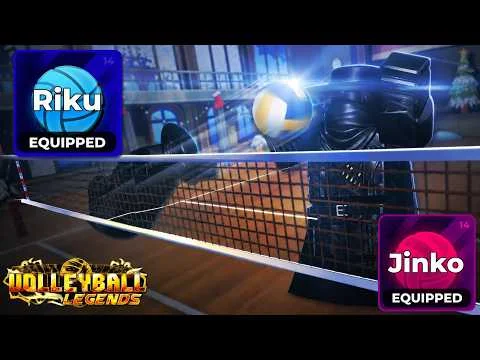
Holographic Walls is Riku's signature passive mechanic. When you spike or serve, a semi-transparent holographic screen appears on the opponent's side of the net, obscuring the ball's trajectory during the critical first fraction of a second after contact. This forces the defender to read your body language and approach angle rather than tracking the ball visually. The effect is strongest on cross-court spikes and jump serves, where the ball already has a longer travel time.

Holo Walls activation tips

Maximize the holographic effect

  • Vary your spike timing — the holo effect resets on each contact, so mixing quick sets and delayed approaches keeps the opponent guessing.
  • Use jump serves to maximize the ball's hidden travel time — the serve starts behind the wall and stays hidden longer.
  • Angle your spikes toward the sideline — the holowall covers more of the court when the ball travels diagonally.
  • Pair with abilities that complement unpredictability — Extra Touch and Magnetic Pull give you second-chance options when the opponent guesses correctly.

Best Ability Builds for Riku

Aggressive Spiker Build

Riku Holo Walls gameplay demonstration
Riku's Holographic Walls mechanic in action — the ball disappears behind the holographic screen, forcing defenders to read body language.

The aggressive build doubles down on Riku's spike power. Equip Heavy Impact to make your spikes even harder to dig, and Power Jump to increase your approach speed. This build is most effective in 1v1 and 2v2 where you are the primary scorer. The trade-off is reduced defensive coverage — you need to win points quickly before stamina becomes a factor.

Deceptive Hybrid Build

The deceptive build uses Extra Touch and Magnetic Pull alongside Riku's natural holo effect. Extra Touch gives you a second chance if your first spike is read, while Magnetic Pull lets you drag the ball away from defenders. This build excels in 3v3 where rallies are longer and unpredictability creates scoring opportunities for teammates.

Safe All-Rounder Build

Balance Riku's offense with defensive insurance. Equip Recover to restore stamina after long rallies, and Intuition to read opponent spikes more effectively. This build sacrifices some spike power but keeps you on the court longer, making it ideal for competitive play and tournament formats.

Riku requires practice

Holo Walls is powerful, but its effectiveness depends on your ability to vary your approach. Practice in 1v1 to master the timing before taking Riku into competitive 2v2 or 3v3 matches.

Q1

Is Riku good for beginners?

Riku is not recommended for absolute beginners. The Holo Walls mechanic requires good spike timing and approach variation. New players should start with a simpler Spiker like Ronin or an All-Rounder before graduating to Riku.

Q2

What game mode is Riku best in?

Riku excels in 1v1 where the holo effect forces the single defender to guess, and 2v2 where one reliable scorer can performs strongly in. In 3v3, Riku is strong but requires teammates who can convert the chaos into points.

Q3

How does Riku compare to other Secret styles?

Riku is more mechanically demanding than most Secret styles. Unlike Taichou (focused setting) or Kumo (pure defense), Riku requires active engagement with the holo mechanic to be effective. The ceiling is higher, but the floor is lower.

---